Blog Archives

Journal: Week 1
2024/08/06 Journal, Entry 5
Tuesday, 8/6
About to kick off our 8th grade season. Practice plan as follows…

Got some good chute work in with OL and worked on wedge fit and pulling. Did not get to defense tonight as lightning came at the end of practice. 6 absences. 😦
Wednesday, 8/7
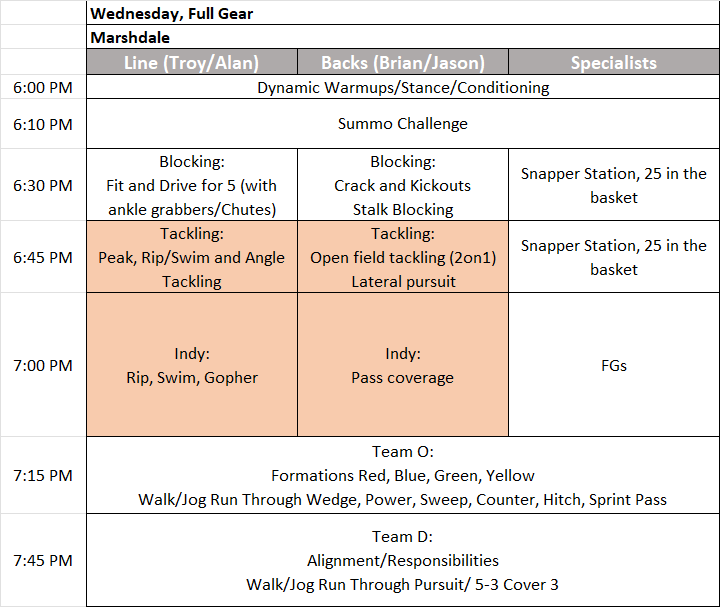
We worked through the entire schedule. Tucked some LB chute work in (shuffle steps, drop under the chute then explode face first extending up into the bag-holder). Added 10 minutes of quality wedge reps at the end. Decent practice overall, but I’m a little dismayed by the 6 absences again. Difficult to run anything resembling team with mostly dads holding bags on D. I addressed it by publishing everyone’s attendance with no commentary.
Another team and their parents cut through the middle of our team defensive session. I yelled at them as they strolled through and they threw me their smug look of contempt. People seem to have become so utterly un-self aware of how they affect others… or perhaps I am just grumpy-old-man now. Lol. The utility of publicly chewing their ass was not to get to them so much as it plants the seed within the minds of MY team that me getting nasty on people under certain circumstances is a real possibility. Ha!
Had a long chat with LG about attendance and philosophy last night. I need to work very hard to practice what I preach because I think it is the right path.
My personal priorities are:
1) Do not allow critics to affect me
2) Immediately move on emotionally from any undesired game results
3) Do no overreact to the myriad of inevitable challenges, letdowns, and affronts
4) Listen to my instincts and control my impulses
Thursday, 8/8
Rained out! Called it at about 5:10. Not surprisingly, the weather calmed down by about 6:15. Tough to ask folks to drive in that, but it’s tempting to be disappointed when the skies part and you think you could be practicing. The decision was made with best intent and the best available information at the time. No regret allowed!
Friday, 8/9
Random thoughts before practice:
Been contemplating the creative side of things and the desire to present ideas and offer my experience to others. That’s a big part of what writing the SSSW playbook was about. I would have never made it for public consumption without SP’s prodding, but I’m glad I did. On the other hand, the older I get, the more pointless and even silly it seems to want to share anything unsolicited. There is very little, if any demand. Every coach already knows everything. And those who don’t are bombarded with a tsunami of offerings, many of which are redundant and/or largely ineffective. And so, sharing my football knowledge is really little more than just an exercise of personal vanity. Preparing things for public consumption that will never be consumed does have some utility, however. When preparing items, the exercise forces me to organize my thinking and to blow off all the meaningless mental chaff.

The practice energy was good. Tackling was executed with intensity. The gauntlet drill was performed with great enthusiasm. Practice wound down with a wedge rep session. We started with JL at blocking back. This appeared not to sit well with WK who made some very intense tackles on JL. JL returned the favor and the intensity was as high as I have ever seen it. Coach Bit pulled them both to the side to attempt to contain the hostility to the drill. They are both excellent players and we want them to understand that we need them both on the field at the same time, and that we are not picking one over the other. We don’t want WK to misinterpret it as being unappreciated. He is and has been our best player. Again, everyone is equal, but some are more equal than others. I reached out to WK’s mom about it. Upon reflection, perhaps I should have left it alone… let it breathe and not try to interpret for them or guide their response. I injected myself into a situation where it wasn’t beneficial or necessary. This gets me back to my “less talk, more action” pledge. The fates have set a course for this team. I need to resist them less and focus on my job and what I can control.
Anyway, it was a great week even though we missed a day. We cannot control the weather so I am not going to fret over it. I am a little concerned about the lack of attention I’ve given to team defense. We have spent good reps on pursuit, tackling, and coverage, but we need more team defense work.
Gratitude:
We were sad to lose JE, OK, and RA, but are very grateful for the new players we have added. They have great potential. I am so thankful to be able to be their coach and for being able to coach.
Onward!
Week 1 Overall Attendance = 81%

Journal: On Scoreboards and Stoicism
2024/07/31 Journal, Entry 4
Been reading the philosophy of the Stoics. It’s been mind-altering. It’s a hard mental path, difficult to adopt and master, but I see the truth in it. I wish I had read Marcus Aurelius 30 years ago!
A coach asked for advice on how to handle an 0-2 start. I replied with the following. I intend to follow my own advice if/when it happens again.
- Realize that your biggest enemy is your own doubts. You will be tempted to listen to and believe the growing chorus of critics that will poison your thoughts. Work hard to block them out. Critics add zero value. If they confront you… smile at them, nod in agreement, don’t get defensive, look them in the eye when they talk while you pretend to listen, then walk away and purge every word they said from your mind. If they are insufferable, cut their kid from the team. You owe it to the other 20 or so kids.
- Stay on plan- with focus on get-off and pursuit.
- The biggest killer of offenses, by far, that I have ever seen, is giving up inside penetration. Drill your OL to stop that at all costs. Forget the blocking technique until you can stop penetration. It is number 1! If you can’t stop penetration, everything else is bullocks.
- Bad teams can’t tackle. Tackling is ALWAYS a function of good pursuit. Work on lateral pursuit with cutbacks BEFORE form tackling. It’s vastly more important.
- Every losing team I’ve ever seen gets their DL blown off the ball. Fix that with drills. 2 on 1. 1 on 1. MAKE your DL hold their ground.
- Simplify your playbook and eliminate everything that cannot be made to work reliably in 3 practices.
- Don’t ask your players to do it. Stop talking about how to do it. Don’t beg them to do it, either. MAKE THEM DO IT. STFU and rep. That’s your job. Talking is not coaching. Leave the talking to the politicians and radio hosts.
- One last thing… Any coach who actually had to coach has lost and will lose again. The scoreboard is just a point, a mere snapshot in time. Most of us vastly over-estimate its importance and confuse game results with our ongoing status and worthiness. A win is but one single frame, and we exist in a moving picture. One instant after the game ends, the game becomes an unalterable figment of the past… an artifact. It is best to merely absorb the knowledge gained and delete the rest of the reaction to it. Don’t let it have any impact on you in the present. No criticism or praise is of any meaningful benefit to you in your endeavor. Showing elation or gloominess days later at practice is of no benefit to your players. It’s just pointless virtue-signaling and it steals the experience from your players. Living in the past is useless. You exist in the present to build something for the future. Get to work, and leave the artifacts to the historians.
P.S. I don’t write this journal for anyone. It is a repository of thoughts and experiences for me. If you get something out of it, great.
P.S. This is a note to self: Your players never let you down. YOU let your players let you down.

Journal: VCPs
2024/07/25 Journal, Entry 3
I love this time of year. Good turnout: 13 of 20. Got a lot of reps in.
- Get-offs
- Drive for 5
- Angle Tackling
- Lateral Pursuit
- Sweeps and Counters
- Coverages (7 on 7)
- Route Concepts
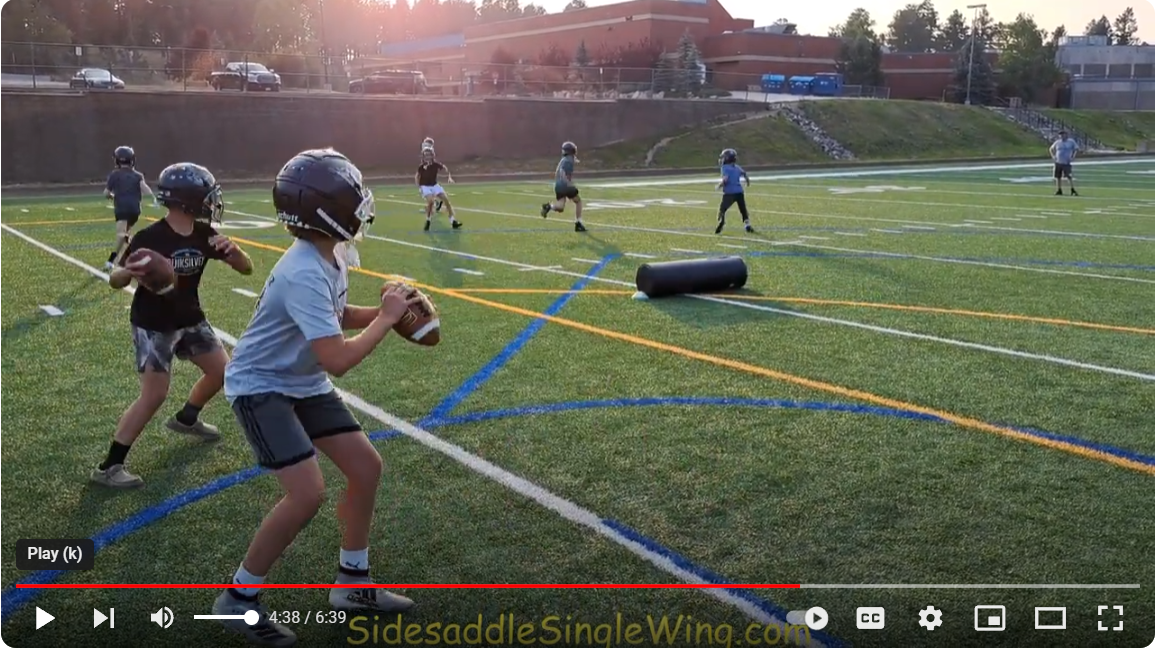

Passing: The Trips Game
There is a pile of passing game tutorials and explanations available online for anyone who wishes to forage through it, but I’ve found the plays discussed in clinics and tutorials tend to be disconnected elements of the playbook offerings available. Making these concepts harmonize with a direct snap, run-oriented system can be challenging. We want our passing plays to be integrated, where one sets up the other, and each play is complimentary. Similar to our running plays, we want all the plays to start out looking the same, from the same set, then have them be able to attack the defense in different ways. For us, this renders the concept of a “route tree” as just noise adding useless complexity. We don’t need nor do we even want 729 (9^3) possible route combinations. Getting enough reps to run, let alone learn, a tiny fraction of that number is not realistic with only about 300 total passing practice reps available before the first game.
We have three well-established, proven, core passing plays out of our single wing Red and Blue set. But to evolve our passing game, we added a trips look that we think gives us more options to stress the defenses we face. But again, we don’t want to add a big bag of dozens of plays to that set. We want a tidy package of inter-related ones, a list reduced and simplified as much as possible. The greater the simplification, the easier the learning and the execution.
The defense dictates what the appropriate route combination and passing concept should be used, so we started our analysis there. We painstakingly logged every defense aligned for every play we ran out of our trips set for the entirety of our 7th grade season. We came up with 12 different defensive alignments (16+ if you count all the nuances in depth and width).
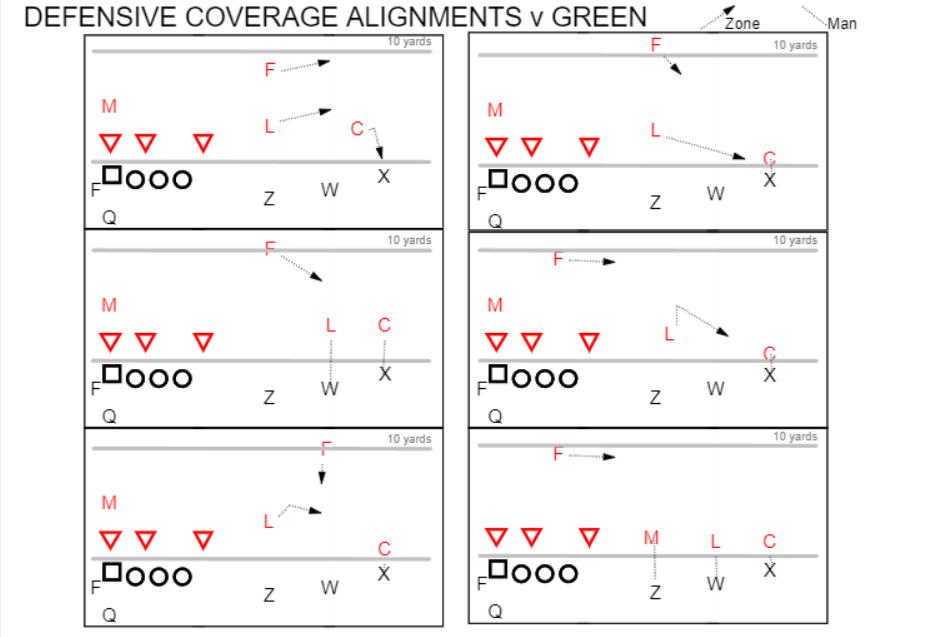

To simplify this, we created a box within the diagrams in front of each receiver. These boxes extend inside of each receiver to half the distance to the next receiver and then down field for ten yards. If a defender aligned in the box, the box was assumed “capped” or “covered” and was colored red. If no defender was aligned, we made the box green. We resolved to 5 box combinations:
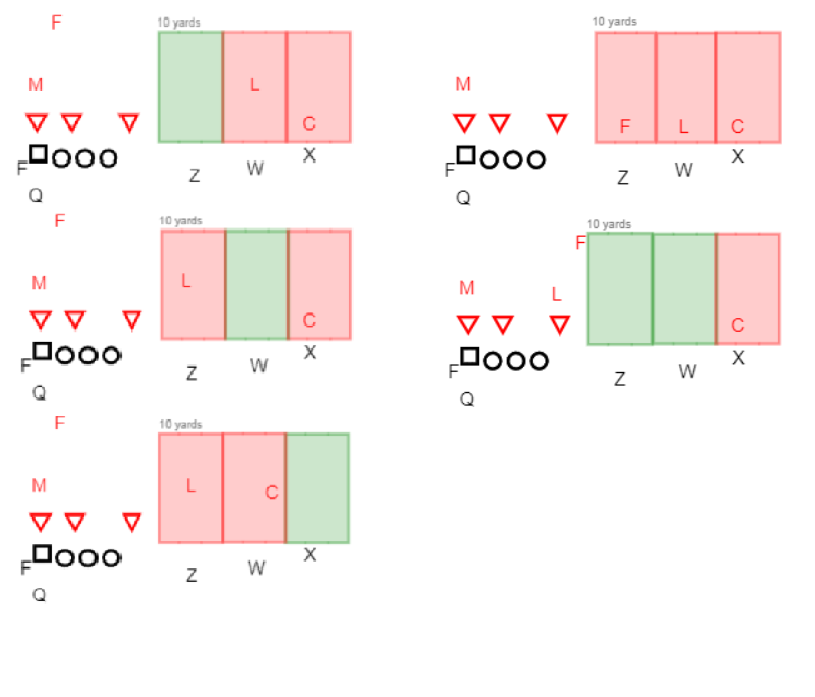
What we’re left with is a simplified key, or matrix, for play calling. If a coach or the QB can identify the occupied and empty boxes, he can make a play call that maximizes our chance for success by putting one defender into extreme conflict, creating spacing for a receiver, running an obstruction/rub/pick route combo, audibling to a running play, or throwing to the short side. Using the routes we already practice, we came up with the following options:

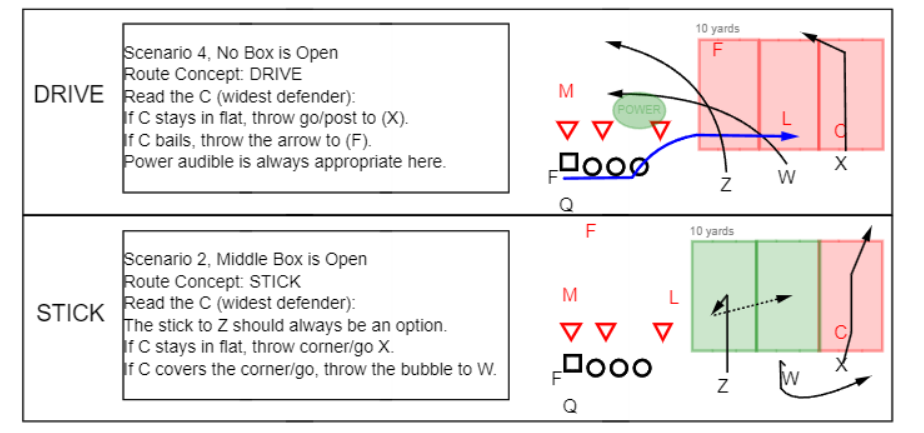
The 5 scenarios are all simple reads and call one of 4 route combinations (STICK is used twice). We’ve noticed that the SNAG leaves the bubble significantly open most of the time (62.5% on 25 of 40 times run). That’s a direct function of pulling the cover 3 CB off with the W or the CB playing too soft. So you’re probably never wrong running SNAG unless they have manned up all three receivers. If they do that, we would run all three off with DRIVE and slip the F into the flat on an arrow route. The Power audible is a tasty option if their LB is wide and if they bring 2 CBs over, then that should be an automatic Y CORNER to the short side. We’re just going to take what they give us. These are all fast-developing routes, breaking at 5-7 yards. We don’t have a lot of time… maybe three seconds.
Now, we have not installed this, yet. This is just a concept. If we are not comfortable with the Q calling pass audibles every play, we will assume their alignment from the previous play and send the play in. Or, we can read it from the sideline and hand signal the Q. Either way, we are going to give it a try. If it works, I’m going to add it to the SSSW playbook. We’ll see.


THE FLOOD (aka SPRINT PASS)
Flood is a core play for us. We install it in 2nd grade. It adopts multiple route concepts into one play along with a run option. There is a conflict, spacing, and a play action element to it. We use a sprint out to buy the QB time and to present a run option to him. The design (since 6th grade) is to use our Z (in rocket motion) to log back and pin the DE. The X should run a go route with mandatory outside release to get the CB’s hips turned away from the QB. The WB should either fake a 2nd level block or fake a go, then run an out at 5-7 yards that gains depth if the flat cover guy is underneath him and the CB has bailed on the go route. Take the green grass they give us. The QB has two reads: 1) High or Low receiver then 2) Run for it. We can attach an arrow route to the BB to create additional conflict for the flat/curl/out defender. The defense tends to get tuned in to our running QB and they’ll often abandon the WB running the out. We’ve been very successful with it at all age levels.
There Are Only 6 Route Concepts
I experienced the great benefit of being a high school assistant coach for two years on a team that ran the Mazzone version of the Air Raid offense. Although I was a defensive coach, I picked up on the core concepts by osmosis. It was reinforced upon me that passing is difficult, even in high school. There exists a predominant reliance upon the “get the ball to fast kid” strategy. That’s all good and fine, but that strategy is what I describe as “unicorn dependent.” As a coach, I just really don’t want to be reliant upon a contrast in talent in order for a play to work. So I dove in to passing concepts to see what makes route combinations work in the absence of a talent mismatch. After studying our high school playbook and watching dozens of hours of YouTubes, I’ve decided that there are really only 6 methods of getting receivers open. If I’ve missed any, please let me know and I will revise my analysis accordingly. As far as I can tell, the possible route concepts are as follows:
The Mismatch
Used against Man or Zone
As mentioned, this is where a faster, bigger, stronger kid can make his own space to catch a ball by simply running past, leaping over, or out-muscling a weaker defender. This is the dominant passing concept at the youth level. It is a perfectly valid tactic that every coach should exploit if available to him as it is the simplest to implement. Jump balls, go routes, and 50/50 balls are examples of mismatch. If no other route concept is employed, then the route concept is based upon Mismatch by default.
Obstruction
Used against Man
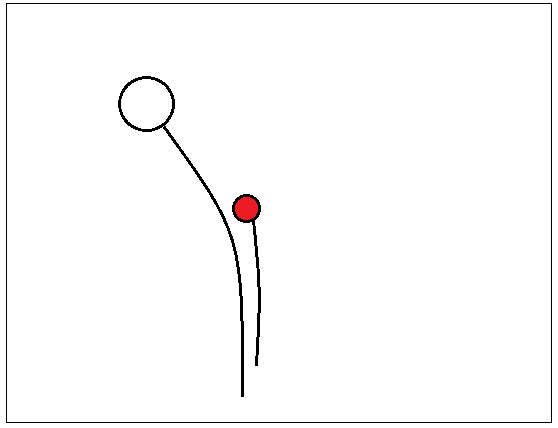
This concept seeks to create receiver space by obstructing the covering defenders (within the framework of the rules) to create open space for the receiver to catch and run. Mesh, rubs, and screens utilize this concept.
Conflict
Used against Zone
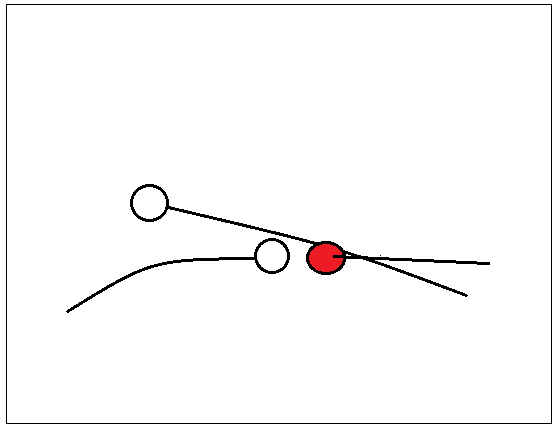
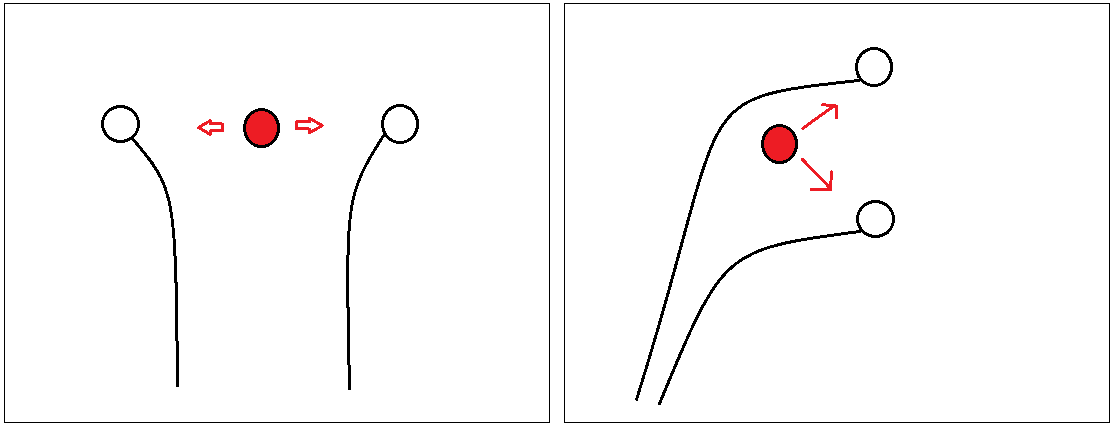
This concept seeks to force one defender to choose one of two possible receivers to cover (or forces two to cover three or three to cover four). The choice is presented simultaneously. If he chooses one, the another receiver will be open. Levels, drive, and four verticals, as well as scissors route combinations are examples of creating Conflict.
Spacing
Used against Man or Zone
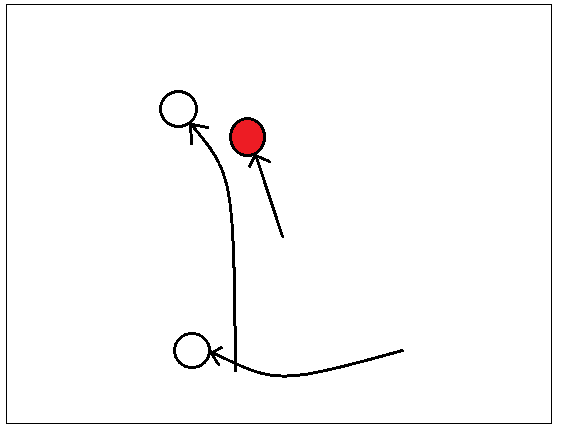
This concept seeks to create space for one receiver with the route(s) run by another. It is similar to conflict but is sequential rather than simultaneous. The first route draws off the defender and the open space is then backfilled by another receiver. A clear-out, swing, wheel, checkdown, and shallow cross are forms of spacing.
Play Action
Used against Man or Zone
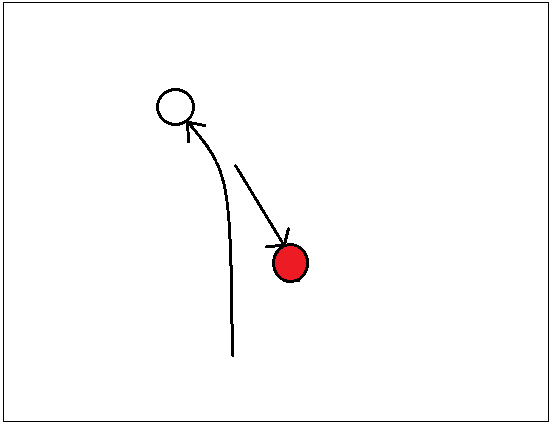
This concept is related to Spacing in that it attempts to draw a coverage player off his man or a coverage zone in order to support an illusory running play. Our “Y Corner” is a form of Play Action by design.
Receiver Choice
Used against Man
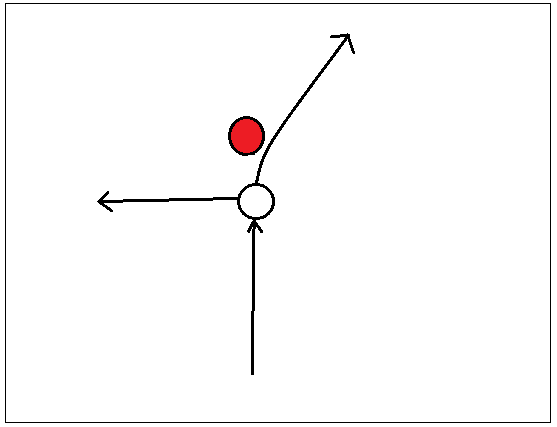
This concept gives an option to the RECEIVER who is reading the play of his defender. If the defender tries to take away A then the receiver exploits B. The run-and-shoot offense uses Choice routes extensively.
The 6 Route Concepts:
1. The Mismatch
2. Obstruction
3. Conflict
4. Spacing
5. Play Action
6. Receiver Choice
All route combinations attempt to leverage at least one of these six concepts. And they all must be executed within the context of time. The longer the design concept takes to develop, the greater the risk of play failure. The less athletic the offense (compared to the defense) the better the execution and timing that is required to be successful. This requires reps, reps, reps, reps, reps.
The concepts can be used in combination. Our Y Corner play utilizes both Play Action and Mismatch. Our Flood play leverages a Conflict concept against zone but we can tag it with an arrow route that adds a Spacing element. When designing pass plays, I think it’s important to build in a route concept other than The Mismatch in passing plays. If a mismatch exists, great! But the reliability and effectiveness of the play will be increased if it can be designed to incorporate another concept.

Y Corner/TE Fade (5th Grade/10u)
Our Y Corner play is a play action passing concept that releases the short side end on a corner route that is often uncovered by the defense over-reacting to Power in the opposite direction. Using a taller player with goods hands also creates a mismatch opportunity as most youth teams put smaller-fasters in at defensive backfield positions.
Play Action Passing Concept
Used against Man or Zone
This concept is related to Spacing in that it attempts to draw a coverage player off his man or a coverage zone in order to support an illusory running play. Our “Y Corner” is a form of Play Action by design.
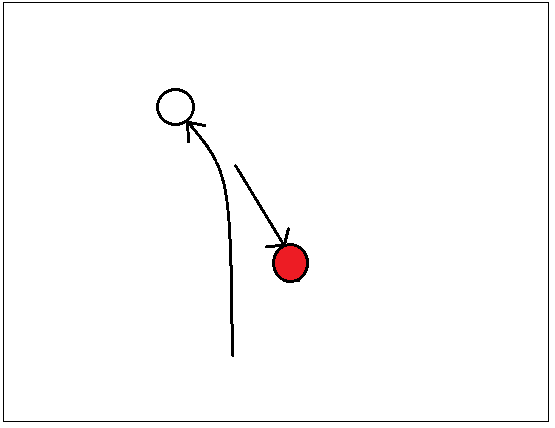

Enhancing the Football Running Game with the Passing Game
At a bare minimum, establishing at least the threat of a passing game is critical against the best opponents. For C gap running teams like us, the lack of a passing threat invites the defense to put 10 in the box and crash their edge players in like a vice. They’ll end up squeezing all the space out of the C gap leaving us nowhere to run. The solution is to exploit the weakness they present when over-playing the run. It sounds simple.
Running the ball is a one-dimensional science in that running plays attack a point along a single line that extends left and right. Nerds describe this as a single “axis”. Running plays work positively by pushing the defenders away from or sealing defenders off from a point on that line (as with Power, Blast, Sweep plays). Or they work negatively by drawing off and spreading defenders apart along the line to create opening points (as in misdirection and stretch plays). All running play designs use one or a combination of both of these concepts.

Now, some nitpicker out there might suggest that running is two-dimensional in that successful blocking must address additional levels of the defense. But this is success is achieved sequentially, not simultaneously. The run must pass through the first line before it can pass through the second. Stated another way: a running play cannot attack the secondary level before it breaks through the front. Therefore, running is just a sequence of one-dimensional events.
Passing, on the other hand, is two-dimensional in that it is capable of attacking forward, into the defense, in addition to left and right. It can be said that passing exists on two axes, also known as a plane. This forces the defense to defend this two-dimensional space rather than just a line.
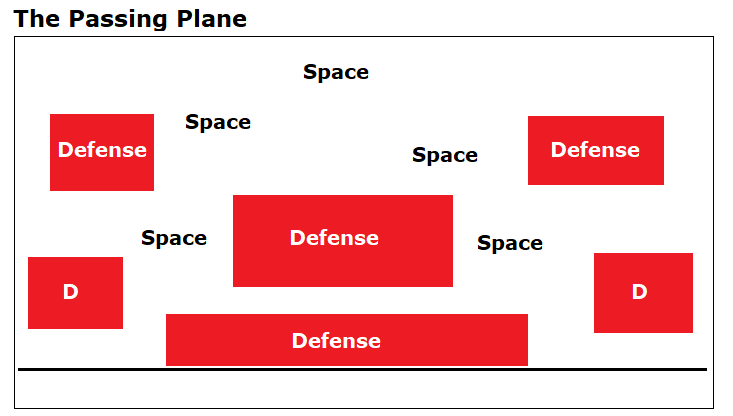
Our ability to force the defense to cover two-dimensional space is useful to draw the defenders OFF the running axis or AWAY from specific points on the running axis. The more effective our pass plays, the more the defense must honor them and the more effective our running game should be as a result.
An area (or plane) is vastly more difficult to defend than a line. But the offset is that throwing and catching is vastly more difficult than running. To be successful, a receiver must obtain enough open space in which to catch the ball without it being knocked away by the defender. The talent of the receiver and the QB, relative to the defenders, determines how much open space must be obtained. This exercise is simple for a team with a really fast kid and a QB with a strong, accurate arm versus a defender not as gifted. In this scenario, there is no coaching necessary beyond “throw the ball to the fast kid.” This is the simplest passing concept– the Mismatch. Unfortunately for most of us, we don’t usually have access to this advantage and we must design ways to get our receivers open. This process is where offensive coaches encounter another limitation: Time. Typically, the less the athletic advantage the offense has, the more complex the play designs must be to get receivers open in time. But the more complex the play design, the more time it takes to execute it. This tradeoff limits the consistency and effectiveness of almost all youth and most high school passing systems primarily because pass blocking is generally reactive and difficult to teach and thus QBs have very little time.
To prevent offensive players from obtaining the ball in one of these spaces, the defense can implement one of two (or both) of the following tactics. They can attempt to eliminate the spaces in a locational manner by assigning defenders to locations (aka “zone”) or they can eliminate spaces directly by assigning defenders to the receivers so that the open space is eliminated wherever they go (aka “man to man”).
Offenses use receiver routes to attempt to exploit the spaces the defense leaves in the pass coverage plane. The combinations of possible receiver routes can be aggregated into a single “route tree” that can be leveraged to make play calling more dynamic and flexible.
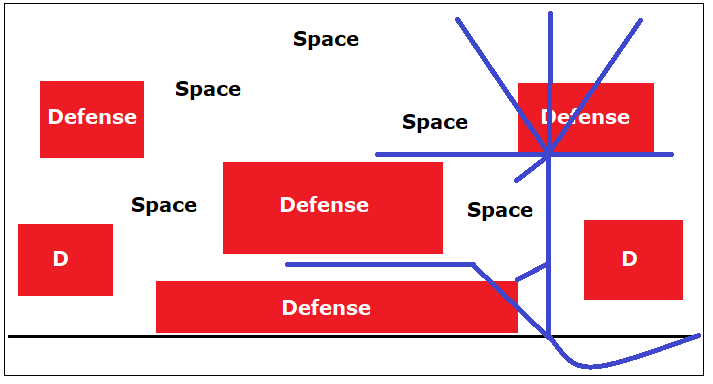
…but the defense is not static and will adjust to the receivers moving towards the openings (zone) or simply deny the openings by player assignment (man). Thus, a route tree alone will not get a receiver(s) open (unless the defense is unsound or there is a Mismatch coverage situation). Therefore, a COMBINATION of routes must be applied where at least two routes are working together to create space for at least one of the receivers. We call this a “Route Concept”.
To get receivers into space using a Route Concept requires time. The play design must increase the time available to throw or reduce the time required to get open or some combination of the two. The time to throw can be lengthened by the design of the protection or by the movement of the QB (i.e. a rollout, for instance). The time required for the receiver to get open is a function of the route combination. During grade school recess football, everyone is a receiver or pass defender except the QB. There is typically no pass rush and no pass blocking is needed. The QB has infinite time– at least until the bell rings ending recess. The primary Route Concept employed in recess football is “just run around until you get open.” In structured football, the QB has only a few seconds at best. Thus, Route Concepts must be executed successfully within a very short span of time.
So what are the Route Concepts that can be applied by route combinations to get receivers open? It seems to me they really fall into only a few categories:
Mismatch
Used against Man or Zone
As mentioned, this is where a faster, bigger, stronger kid can make his own space to catch a ball by simply running past, leaping over, or out-muscling a weaker defender. This is the dominant passing concept at the youth level. It is a perfectly valid tactic that every coach should exploit if available to him as it is the simplest to implement. Jump balls, go routes, and 50/50 balls are examples of mismatch. If no other route concept is employed, then the route concept is based upon Mismatch by default.
Obstruction
Used against Man
This concept seeks to create receiver space by obstructing the covering defenders (within the framework of the rules) to create open space for the receiver to catch and run. Mesh, rubs, and screens utilize this concept.
Conflict
Used against Zone
This concept seeks to force one defender to choose one of two possible receivers to cover (or forces two to cover three or three to cover four). The choice is presented simultaneously. If he chooses one, the another receiver will be open. Levels, drive, and four verticals, as well as scissors route combinations are examples of creating Conflict.
Spacing
Used against Man or Zone
This concept seeks to create space for one receiver with the route(s) run by another. It is similar to conflict but is sequential rather than simultaneous. The first route draws off the defender and the open space is then backfilled by another receiver. A clear-out, swing, wheel, checkdown, and crossers are forms of spacing.
Play Action
Used against Man or Zone
This concept is related to Spacing in that it attempts to draw a coverage player off his man or a coverage zone in order to support an illusory running play. Our “Y Corner” is a form of Play Action by design.
Choice
Used against Man
This concept gives an option to the RECEIVER who is reading the play of his defender. If the defender tries to take away A then the receiver exploits B. The run-and-shoot offense uses Choice routes extensively.
All route combinations attempt to leverage at least one of these six concepts. And they all must be executed within the context of limited time. The longer the design concept takes to develop, the greater the risk of play failure. The less athletic the offense (compared to the defense) the better the execution and timing is required to be successful. This requires reps, reps, reps, reps, reps. It is for this reason that we deem route trees to be of little marginal value IN GAME at our level. For most teams at amateur levels, introducing a novel route combination, mid game, by referencing an abstract route tree, ignores the critical importance of timing and execution that can only come from numerous practice reps. We think our passing game will be better served by adding a “Choice” route or a tag that adds an additional route to the existing plays’ route combinations rather than grab-bagging passing route combinations in the middle of a game.
Ideally, each route combination must also attempt to simplify the read of the QB. The more complex the read, i.e. the greater the range that the QB must view and process, the longer it will take to compute, and the greater the risk of play failure. If a QB’s total viewing range is 180 degrees from left sideline to right sideline, then an amateur QB should probably not be asked to read more that a quarter of it (or 45 degrees) on any given play. Consideration must also be made for obstructions of view such as linemen as well. This can make the mesh, crosser, and drive route concepts that break open in the middle of the field, in front of linemen, difficult to see and read for a younger or shorter QB.

Lou Holtz once said that “a team could put a receiver on the field with no arms and the defense will assign someone to cover him.” This has profound implications for play design! It implies that you can occupy (or remove) at least one defender from the play with a player you never intend to throw the ball to. In theory, you can remove a defender from the running axis without even intending to pass. We try to use the routes outside the narrow QB read window to draw defenders off based on the Lou Holtz premise. If the defense simply stops covering a kid, then it’s my job as coach to spot that and throw him the ball on a later play to make the defense pay. This is at the root of play-calling art and it is difficult, especially when viewing from the sideline. Anyone can call plays. It takes skill to call the RIGHT plays. Skill comes from experience. It takes lot’s of practice and discipline to train the eye to focus on the defense rather than on the ball.
We pass to open up the run and we believe passing is necessary to beat the best teams. Forcing the defense to play in a two-dimensional plane, rather than one dimension, will draw defenders off the running axis and make running the ball easier. If we can get kids open and just throw the ball at them (they don’t even need to catch it) the defense will be worried enough about it to honor the pass and pull defenders off the running axis. In the absence of the availability of a receiver mismatch, we must apply thoughtful route concepts to route combinations to get receivers open. I think any passing offense would do well to build a passing game with route combinations based on at least three of the concepts indicated above rather than just relying on a mismatch. Most importantly, any lower level passing system should be simplified as much as efficiently possible.
If you think I’m missing something let me know in the comments. I do not claim to be a passing expert. This post is part of my journey towards furthering my understanding of this great game. Likes are appreciated if it was interesting or useful.


 Sidesaddle Single Wing Football